Welcome Message
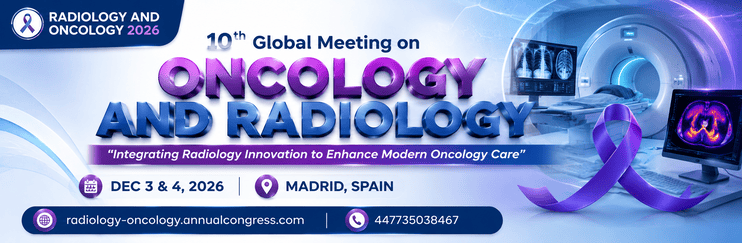
We are delighted to welcome global leaders, researchers, clinicians, and industry experts to the "10th Global Meeting on Oncology and Radiology", scheduled for December 03-04, 2026, in Madrid ,Spain.
Guided by the theme Integrating Radiology Innovation to Enhance Modern Oncology Care, this meeting highlights the expanding role of advanced imaging in reshaping cancer diagnosis and treatment pathways. Scientific discussions will explore how radiomics supports data-driven decision-making, while emerging applications of molecular imaging continue to refine tumor characterization. The programme also reflects progress in functional imaging biomarkers, enabling clinicians to evaluate disease behavior with greater precision across the cancer continuum.
Through keynote sessions, panel discussions, and interactive workshops, participants will examine evolving strategies influenced by artificial intelligence and image-guided technologies. These sessions aim to strengthen interdisciplinary collaboration and promote the translation of imaging innovation into meaningful clinical outcomes.
We look forward to welcoming you to Paris for an engaging scientific exchange that advances modern oncology care through radiologic excellence.
Target Audience
-
Medical Oncologists
-
Radiation Oncologists
-
Diagnostic & Interventional Radiologists
-
Nuclear Medicine Physicians
-
Surgical Oncologists
-
Cancer Imaging Specialists
-
Radiology Researchers & Imaging Scientists
-
Oncology Researchers & Translational Scientists
-
Medical Physicists
-
Radiotherapy Planning Specialists
-
AI & Computational Imaging Experts
-
Biomedical Engineers in Imaging Technologies
-
Molecular Imaging Scientists
-
Cancer Epidemiologists
-
Clinical Trial Investigators
-
Academic Faculty & Educators
-
Healthcare Technology Developers
-
Pharmaceutical & Imaging Industry Professionals
-
Hospital Administrators & Medical Directors
-
Policy Makers in Cancer Care
-
Graduate Students
-
Postgraduate Trainees
-
PhD Scholars
-
Clinical Fellows & Residents
About Conference
The 10th Global Meeting on Oncology and Radiology, scheduled for December 03-04, 2026, in Madrid, Spain, is an international scientific forum dedicated to advancing cancer care through imaging-driven innovation. Anchored by the theme Integrating Radiology Innovation to Enhance Modern Oncology Care, the conference emphasizes the essential role of radiology in precision oncology and multidisciplinary cancer management.
He scientific programme spans a wide range of topics shaped by advances in hybrid imaging platforms, evolving tumor microenvironment analysis, and the integration of AI-assisted diagnostics into routine oncology workflows. Sessions will also highlight the growing importance of image-guided interventions and adaptive strategies that improve treatment personalization and clinical accuracy.
Through expert lectures, panel discussions, workshops, and poster presentations, the meeting fosters collaboration among clinicians, researchers, academicians, and industry leaders. The conference serves as a global platform for sharing knowledge, encouraging innovation, and shaping the future of oncology and radiology in an era of precision medicine.
We warmly invite you to Paris for a scientifically enriching experience focused on collaboration, discovery, and excellence in modern cancer care.
Why to Attend
The 10th Global Meeting on Oncology and Radiology, scheduled for December 03-04, 2026, in Madrid, Spain, offers a premier international platform for clinicians, researchers, academicians, and industry professionals dedicated to advancing cancer care through imaging innovation. Across two intensive scientific days, participants will explore evolving strategies in diagnostic radiology, radiation oncology, molecular imaging, and image-guided interventions that continue to transform modern oncology.
This meeting provides a unique opportunity to engage with global experts and gain insight into research-driven approaches shaped by advances in radiomics, the expanding role of molecular imaging, and the integration of artificial intelligence into oncologic workflows. Discussions will emphasize how imaging precision enhances tumor characterization, treatment planning, and therapy response evaluation.
Whether you are a clinician, academic researcher, medical physicist, or technology innovator, the conference offers an ideal environment to strengthen clinical expertise, exchange interdisciplinary knowledge, and stay aligned with emerging developments in hybrid imaging platforms and functional imaging biomarkers that are shaping the future of cancer management.
Conference Highlights
-
Global Oncology and Radiology Leaders on One Platform: Gain insights from internationally recognized oncologists, radiologists, imaging scientists, and researchers who are advancing cancer diagnostics, therapeutic planning, and imaging-driven clinical decision-making.
-
Advanced Imaging and Oncology Workshops: Participate in expert-led sessions focused on image-guided interventions, adaptive radiotherapy planning, advanced diagnostic modalities, and clinically relevant imaging applications.
-
Scientific Sessions on Emerging Imaging Innovations: Engage in in-depth discussions covering radiomics-based prediction models, AI-assisted diagnostics, molecular and functional imaging techniques, and innovations in precision oncology.
-
Oncology Imaging and Technology Showcase: Explore cutting-edge imaging systems, analytical software, radiotherapy solutions, and digital health technologies presented by leading industry partners and technology developers.
-
Young Researchers and Early-Career Professionals Forum: A dedicated platform for graduate students, residents, fellows, and early-career researchers to present original work, receive expert feedback, and gain international scientific exposure.
-
Networking and Multidisciplinary Collaboration: Connect with clinicians, academicians, researchers, industry leaders, and healthcare organizations to foster collaborations and knowledge exchange across oncology and radiology disciplines.
-
Awards for Excellence in Oncology and Radiology Research: Recognition of outstanding scientific contributions through honors such as Best Research Presentation, Young Investigator Award, Best Clinical Innovation, and Best Poster Presentation.
Sessions and Tracks
Advanced radiologic platforms allow clinicians to visualize microscopic oncologic changes before symptoms emerge. Subtle contrast shifts mirror cellular instability similar to Corneocyte disruption in compromised tissue. Structural imaging patterns often reflect junctional weakness comparable to Desmosome separation. Early signal attenuation may parallel secretion irregularities seen in Lamellar granule activity. These correlations enhance predictive oncology screening.
Detection Highlights
-
Predictive Imaging Markers
-
Preclinical Risk Assessment
-
Screening Optimization Models
Tumor behavior is shaped by its surrounding architecture and biochemical signals. Imaging modalities detect stromal density changes akin to Fibroblast niche remodeling. Extracellular signal diffusion resembles alterations in Proteoglycan lattice formation. Structural heterogeneity mirrors instability observed in the Dermal scaffold during disease progression. These insights guide therapeutic planning.
Microenvironment Insights
-
Stromal Density Visualization
-
Perfusion Pattern Analysis
-
Hypoxia Mapping Techniques
Functional radiology reveals biochemical pathways underlying malignant transformation. Signal uptake parallels pigment transport mechanisms like Melanosome transport. Enzymatic activity mapping reflects cascades similar to Tyrosinase cascade modulation. Metabolic heterogeneity resembles disruptions in Eumelanin synthesis seen in dysregulated cells. Molecular imaging supports precision oncology decisions.
Functional Imaging Dimensions
-
Pathway-Specific Tracing
-
Metabolic Signal Profiling
-
Cellular Activity Quantification
AI-driven imaging enhances diagnostic precision through deep pattern recognition. Algorithmic learning mirrors adaptive responses seen in Sebocyte regulation. Predictive outputs follow trends similar to altered Lipogenesis pathways. Automated detection models reflect secretion dynamics comparable to Sebum excretion imbalance. AI integration reduces diagnostic variability across populations.
Algorithmic Developments
-
Deep Learning Classification
-
Automated Lesion Detection
-
Predictive Outcome Modeling
Precision imaging optimizes radiation delivery while sparing healthy tissues. Structural resilience assessment resembles Keratin filament alignment in stable cells. Treatment planning considers surface resistance similar to Cornified envelope formation. Repair response patterns parallel hydration binding seen with Filaggrin regulation. These insights improve therapeutic safety.
Radiation Precision Strategies
-
Target Volume Delineation
-
Adaptive Dose Planning
-
Motion-Corrected Imaging
Preoperative imaging defines anatomical margins and tumor extent. Tissue density mapping mirrors organization seen in Basal keratinocyte layers. Boundary clarity reflects adhesion integrity similar to Hemidesmosome anchoring. Vascular imaging parallels nutrient diffusion patterns of the Epidermal basement membrane. Imaging minimizes surgical uncertainty.
Preoperative Visualization Paths
-
Margin Assessment Imaging
-
Vascular Risk Mapping
-
Anatomical Orientation Modeling
High-field MRI enhances soft tissue contrast and cellular resolution. Diffusion signals resemble water movement patterns across Aquaporin channels. Elastic response patterns parallel deformation seen in Elastin fiber networks. Relaxation time variability reflects matrix density similar to Reticular dermis composition. MRI advances tumor characterization.
MRI Innovation Channels
-
Diffusion-Weighted Analysis
-
Functional Contrast Mapping
-
Tissue Elasticity Imaging
PET imaging captures metabolic acceleration in malignant cells. Glucose uptake trends resemble energy shifts in Mitochondrial biogenesis. Signal intensity patterns parallel oxidative stress responses seen in Reactive oxygen species imbalance. Metabolic mapping reflects dysregulation similar to Cellular respiration flux. PET supports therapy monitoring.
Metabolic Imaging Angles
-
Tracer Uptake Quantification
-
Therapy Response Evaluation
-
Metabolic Risk Stratification
Radiomics converts images into quantifiable data sets. Texture features mimic micro-patterns seen in Stratum spinosum organization. Shape analytics parallel irregularities observed in Papillary dermis disruption. Density metrics reflect compositional variance similar to Collagen bundle orientation. Quantitative imaging enhances predictive accuracy.
Data Extraction Perspectives
-
Texture Feature Modeling
-
Shape and Density Metrics
-
Predictive Signature Development
Minimally invasive procedures rely on real-time imaging accuracy. Needle navigation precision mirrors guidance mechanisms of Neural crest cell migration. Tissue response reflects inflammatory modulation similar to Mast cell degranulation. Healing visualization parallels vascular repair seen in Angiogenic sprouting. Imaging improves procedural outcomes.
Interventional Pathways
-
Real-Time Guidance Systems
-
Minimally Invasive Targeting
-
Post-Procedure Assessment
Hybrid platforms integrate structural and functional imaging. Signal fusion parallels dual-layer communication seen in Epidermal turnover cycles. Resolution enhancement mirrors adaptive renewal similar to Keratinocyte differentiation. Cross-modality accuracy reflects balance seen in Cell cycle regulation. Hybrid imaging improves diagnostic confidence.
Fusion Imaging Concepts
-
Multimodal Data Integration
-
Functional-Structural Correlation
-
Diagnostic Confidence Enhancement
Imaging tracks immune response dynamics during cancer therapy. Signal fluctuations resemble activation patterns of Langerhans cell surveillance. Response timing parallels cytokine release seen in Interleukin signaling. Tumor regression mirrors immune clearance mechanisms similar to Antigen presentation pathways. Radiology guides immunotherapy optimization.
Immune Imaging Insights
-
Response Pattern Recognition
-
Immune Activation Mapping
-
Therapy Effectiveness Monitoring
Pediatric imaging requires sensitivity to developmental anatomy. Growth-phase imaging reflects maturation rhythms similar to Epidermal stem cell renewal. Radiation safety parallels protective barriers seen in Vernix caseosa function. Tissue elasticity patterns resemble flexibility of Developing dermal matrix. Pediatric radiology prioritizes safety.
Child-Centered Imaging Views
-
Age-Specific Protocol Design
-
Radiation Dose Minimization
-
Developmental Anatomy Mapping
Breast imaging detects subtle architectural distortions early. Density variation mirrors glandular changes seen in Mammary lobule structure. Signal contrast parallels lipid dispersion similar to Subcutaneous adipocyte behavior. Structural symmetry reflects integrity comparable to Fibrous septa alignment. Imaging supports early intervention.
Breast Imaging Pathways
-
Density-Based Risk Analysis
-
Early Lesion Detection
-
Longitudinal Monitoring
Chest imaging evaluates lung and mediastinal malignancies. Air-tissue contrast reflects permeability changes similar to Alveolar epithelial junction shifts. Fibrotic patterns parallel scarring seen in Myofibroblast activation. Vascular mapping resembles capillary distribution of Pulmonary microcirculation. Imaging refines staging accuracy.
Thoracic Imaging Dimensions
-
Nodule Characterization
-
Staging Precision Models
-
Treatment Response Tracking
Brain imaging captures subtle neurological changes in cancer patients. Signal propagation reflects conductivity patterns similar to Myelin sheath integrity. Tumor infiltration mirrors migration behavior of Glial progenitor cells. Edema patterns resemble fluid imbalance seen in Cerebral extracellular matrix. Imaging supports neurosurgical planning.
Neuro Imaging Perspectives
-
Functional Brain Mapping
-
Tumor Boundary Definition
-
Cognitive Risk Assessment
Abdominal radiology visualizes complex organ interactions. Contrast dynamics reflect absorption processes similar to Intestinal epithelial transport. Fibrotic response mirrors remodeling seen in Hepatic stellate cell activation. Perfusion changes resemble vascular regulation of Splanchnic circulation. Imaging aids treatment decisions.
Abdominal Imaging Routes
-
Organ-Specific Characterization
-
Vascular Flow Assessment
-
Therapy Monitoring
Bone and soft tissue tumors require high-resolution imaging. Density variation parallels mineral shifts similar to Osteocyte lacunae changes. Soft tissue contrast mirrors elasticity seen in Fascial plane continuity. Invasion patterns resemble degradation processes of Extracellular collagen mesh. Imaging improves surgical planning.
Musculoskeletal Imaging Lines
-
Bone Lesion Analysis
-
Soft Tissue Contrast Mapping
-
Structural Integrity Evaluation
Long-term imaging monitors post-treatment changes and recurrence risk. Tissue recovery mirrors regenerative capacity seen in Epidermal renewal kinetics. Fibrosis patterns parallel scarring responses similar to Transforming growth factor beta activity. Surveillance imaging supports survivorship care models.
Survivorship Imaging Views
-
Long-Term Monitoring
-
Recurrence Risk Detection
-
Quality-of-Life Assessment
Emerging technologies redefine cancer diagnostics and monitoring. Signal miniaturization mirrors nanoscale interactions seen in Cell membrane phospholipid bilayer dynamics. Precision trends parallel adaptive modulation similar to Receptor-mediated endocytosis. Innovation pathways align with systems biology approaches like Intercellular signaling networks. Imaging shapes future oncology care.
Future Imaging Horizons
-
Emerging Modality Exploration
-
Translational Research Integration
-
Next-Generation Diagnostic Models
Market Analysis
The global oncology and radiology market continues to show strong growth, driven by the rising global cancer burden and the increasing demand for accurate, early-stage diagnosis. Advanced imaging modalities such as CT, MRI, PET, and hybrid imaging systems play a central role in cancer detection, staging, treatment planning, and disease monitoring, making oncology one of the fastest-growing application areas in radiology.
Technological innovation is a key market driver, with rapid adoption of artificial intelligence, molecular imaging techniques, and data-driven image analysis tools. These advancements enhance diagnostic accuracy, improve workflow efficiency, and support personalized oncology care by enabling precise tumor characterization and therapy response assessment.
The growing use of radiomics and quantitative imaging biomarkers is further shaping modern oncology practice, particularly in clinical research and precision medicine. Imaging is increasingly integrated into treatment decision pathways, immunotherapy monitoring, and targeted therapy evaluation.
Regionally, North America and Europe remain leading markets due to strong healthcare infrastructure and research investment, while Asia-Pacific is emerging as a high-growth region supported by expanding cancer screening programs and healthcare development initiatives. Overall, the oncology and radiology market is expected to maintain steady growth, driven by innovation, increasing clinical demand, and the global shift toward precision cancer care.
Radiology AI Market Growth:
This graph shows the rapid growth of the Radiology AI market from 2024 to 2030, increasing from approximately USD 0.61 billion to USD 2.27 billion. The strong upward trend reflects growing adoption of AI-enabled imaging tools that enhance diagnostic accuracy, improve workflow efficiency, and support early cancer detection. Rising imaging volumes and workforce shortages are further accelerating AI integration across oncology and radiology practices.

Oncology Imaging Market Segments Growth:
This graph presents growth trends across major oncology imaging segments. The whole-body oncology imaging market is projected to rise from around USD 13.27 billion in 2024 to approximately USD 18.04 billion by 2030, driven by expanding cancer screening and disease monitoring programs. Meanwhile, the molecular imaging segment is expected to grow from about USD 2.95 billion in 2024 to nearly USD 3.83 billion by 2030, reflecting the increasing role of functional and metabolic imaging in personalized oncology care.

Abstract Submission and Registration
Oncologists, radiologists, imaging specialists, researchers, academicians, industry professionals, and healthcare innovators are invited to submit original scientific contributions to the 10th Global Meeting on Oncology and Radiology, scheduled for December 3-4, 2026, in Madrid, Spain. Submissions may include research abstracts, clinical studies, case reports, review papers, poster presentations, or e-posters aligned with the conference theme and listed scientific tracks.
Abstract Guidelines
-
All abstracts must be submitted in English.
-
The abstract should not exceed 500 words.
-
The title should be written in sentence case and clearly reflect the focus of the study.
-
Provide the full name, affiliation, and designation of the presenting author and all co-authors.
-
Include a short biography of the presenting author (maximum 150 words) along with a professional photograph.
-
Submissions may focus on medical oncology, radiation oncology, diagnostic radiology, molecular imaging, interventional radiology, cancer biomarkers, image-guided therapies, radiomics, artificial intelligence in imaging, or related research areas.
Review Process
All submitted abstracts will be reviewed by the Scientific Review Committee. Authors will be notified of acceptance, revision requests, or presentation format via email, typically within 24–48 hours of submission. Accepted abstracts will be scheduled for oral presentations, poster sessions, or workshops based on scientific relevance.
Publication
Accepted abstracts will be included in the official conference proceedings and may be considered for publication in associated scientific journals, conference compendiums, or oncology and radiology-focused publications.
Abstract Submission Link:
https://radiology-oncology.annualcongress.com/abstract-submission.php
Registration
Upon abstract acceptance, participants are required to complete their conference registration through the official registration portal. Early registration is recommended to secure participation, gain access to scientific sessions, workshops, networking opportunities, and receive official conference certification.
Registration Link:
https://radiology-oncology.annualcongress.com/registration.php
Visa Guidelines
The organizing committee of the 10th Global Meeting on Oncology and Radiology 2026 does not directly process visas for Spain. However, we provide all necessary supporting documents to assist participants with their visa application process.
Upon request, the following documents can be issued to support your visa application:
-
Official Letter of Invitation
-
Letter of Abstract Acceptance
-
Registration Confirmation and Payment Receipt
Visa requirements vary depending on your country of residence and the regulations of the French Embassy or Consulate in your region. Participants are strongly advised to apply for their visa well in advance of the conference dates.
Letter of Invitation
The Letter of Invitation confirms your accepted abstract and/or completed registration for the congress. This letter is issued in English and may be submitted as supporting documentation for your visa application.
Please note that issuance of an invitation letter does not guarantee visa approval. Visa decisions are solely made by French immigration authorities and respective embassies or consulates.
Contact for Visa Support
For visa-related assistance or to request official supporting documents, please contact:
meevents@memeetings.com
Past Conference
The 9th Global Meeting on Oncology and Radiology successfully brought together oncologists, radiologists, imaging specialists, researchers, academicians, industry professionals, and allied healthcare experts from across the globe. The meeting served as an international platform for scientific exchange, clinical dialogue, and the presentation of innovative research shaping contemporary oncology and radiological practice.
The scientific programme featured keynote presentations, thematic sessions, interactive discussions, workshops, and poster presentations covering a broad spectrum of topics. Key focus areas included advances in diagnostic imaging, radiation oncology, molecular and functional imaging, interventional radiology, image-guided therapies, and the growing role of artificial intelligence in cancer diagnostics and treatment planning.
Participants engaged in multidisciplinary discussions that connected research findings with real-world clinical applications. The conference emphasized translational approaches aimed at improving diagnostic accuracy, optimizing treatment strategies, and enhancing patient outcomes. Sessions encouraged collaboration between experienced clinicians, early-career professionals, and emerging researchers.
The meeting also included an industry exhibition, providing an opportunity for healthcare technology companies and solution providers to showcase imaging systems, diagnostic platforms, software innovations, and oncology-focused technologies relevant to modern clinical workflows.
Overall, the 9th edition was well received for its scientific depth, global participation, and collaborative environment, reinforcing its role as a valuable forum for advancing knowledge and innovation across oncology and radiology disciplines.